
China Top telehandler manufacturer
3.5 Ton telehandler
- Meet ISO / CE / EPA Standards,ect.
- factory direct & 1-on-1 engineer support
- Pre-sales and after-sales service & 12-month warranty
Hot Sale telehandler forklift
A 3.5-ton telehandler offers a standard maximum lifting height of 7m or 10m, supports customized lifting heights, and is suitable for various application scenarios such as construction, agriculture, and material handling.
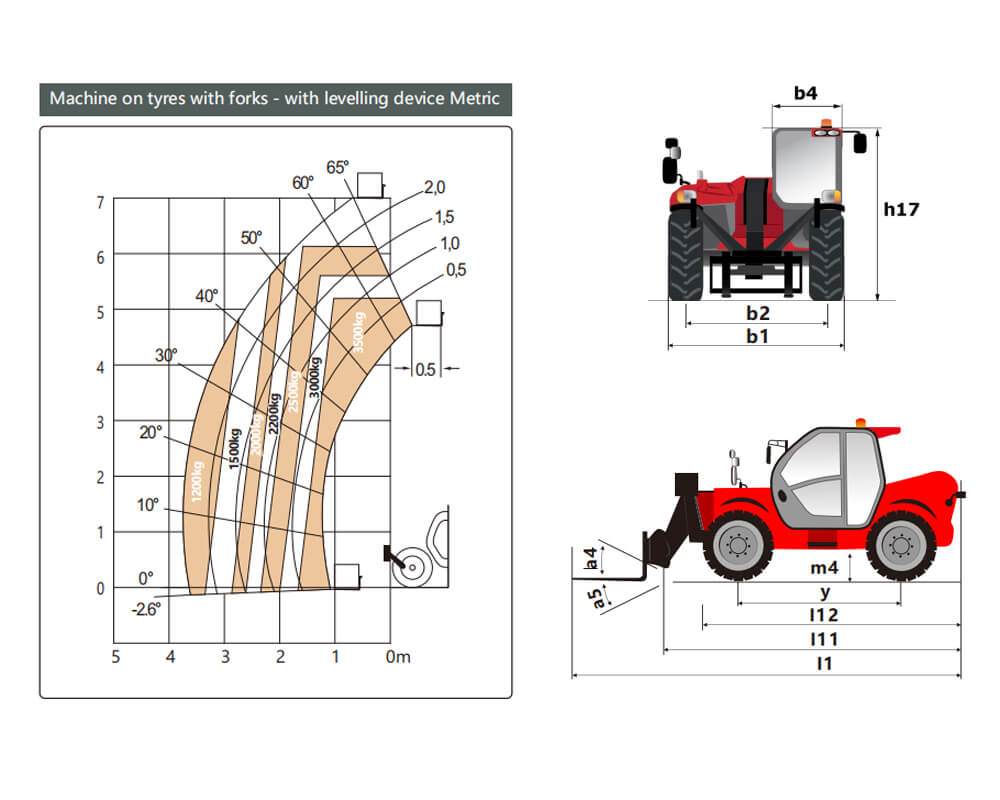
Maximum capacity of 3,500 kg, a maximum lifting height of 7 m, and a maximum outreach of 3.2 m.

- Overall Length: 5.87 m
- Overall Width: 2.2 m
- Overall Height: 2.55 m
- Unladen Weight: 7600 kg
- Lifting Time: 10 s
- Lowering Time: 7 s
- Extension Time: 12 s
- Retraction Time: 8.6 s
Maximum capacity of 3,500 kg, a maximum lifting height of 10 m, and a maximum outreach of 6.1 m

- Overall Length: 7 m
- Overall Width: 2.2 m
- Overall Height: 2.55 m
- Unladen Weight: 9500 kg
- Lifting Time: 10 s
- Lowering Time: 7 s
- Extension Time: 12 s
- Retraction Time: 8.6 s
Hot Sale T3507 & T3510 specification
Here is a comprehensive overview of the specifications for the T3007 and T3510 telehandler, allowing you to clearly understand its configuration and choose the right solution for your construction or material-handling needs.
Specifiche | T3507 | T3510 |
Track Width | 1.78 m | 1.78 m |
Interasse | 3.15 m | 3.15 m |
Altezza da terra | 0.35 m | 0.35 m |
Overall Cab Width | 0.84 m | 0.84 m |
Tilt-up Angle | 12° | 12° |
Tilt-down Angle | 90° | 90° |
Tires Type | Pneumatic | Pneumatic |
Forks (L/W/Section) | 1220×125×50 mm | 1220×125×50 mm |
Max. Travel Speed | 35 km/h | 35 km/h |
Olio motore | 5.5 L | 5.5 L |
Hydraulic Oil | 170 L | 170 L |
Allegati
Our Telehandler supports a wide range of customized attachments to meet different working conditions.
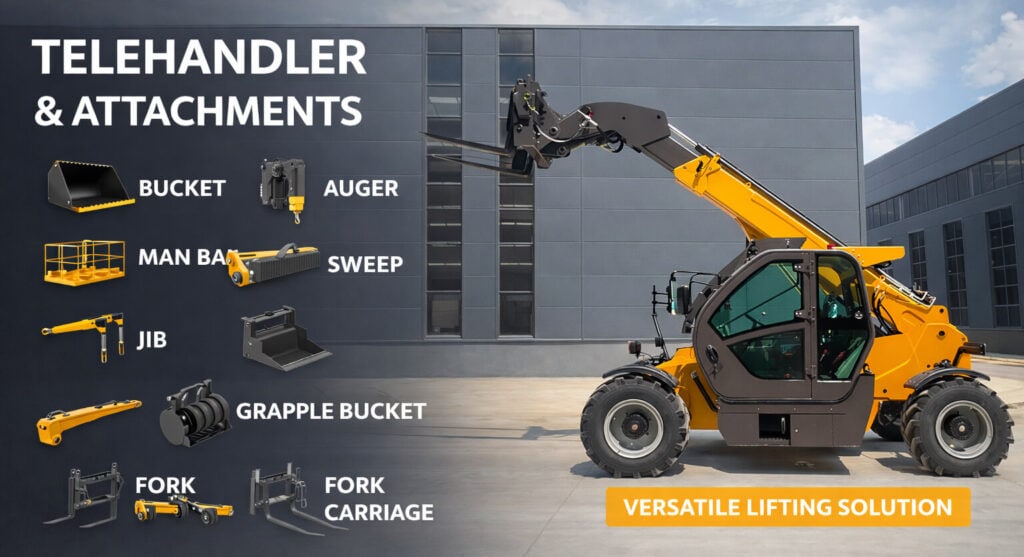
The telehandler is compatible with a wide variety of functional attachments, such as pallet forks, fork positioners, standard buckets, 4-in-1 buckets, extension jibs, hook jibs, truss booms, and work platforms (man baskets). For agricultural use, bale clamps and bale spikes are also optional. These quick-attach tools enhance versatility, enabling efficient lifting, loading, stacking, and material handling. With one machine and multiple attachments, it can easily adapt to construction sites, farms, and warehouse operations.
Custom telehandler Suits Your Projects
Our telehandlers offer flexible customization to suit various markets and working conditions. Customers can select different engine brands and emission standards, and upgrade hydraulics, drive systems, axles, tires, and operator comfort features as needed.
- Engine Options: Yuchai 77.3 kW / Yuchai 74 kW / Yuchai 81 kW / Cummins 4BT3.9-C100 (75 kW) / Cummins QSB3.9-C100 / Cummins QSF3.8 / Yanmar 63–63.9 kW / Perkins 74.5 kW / Yunnei 74 kW / Fiat 75 kW / Kohler 55.4 kW
- Emission Standards: China Stage II / Stage III / Stage V / EPA Tier 4
- Hydraulic Control System: Load-sensing electro-proportional control system
- Drive & Hydrostatic System: Domestic closed hydrostatic drive system / Danfoss closed hydrostatic drive system
- Axle Options: Wet brake axle (Zhuoshibo) with integrated braking system
- Tire Options: Solid tires / 16/70-24 tires / 400/70R24 tubeless tires
- Comfort & Cabin Features: Electric seat with heating / Diesel heater
China top telehandler manufacturer
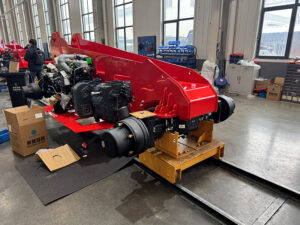
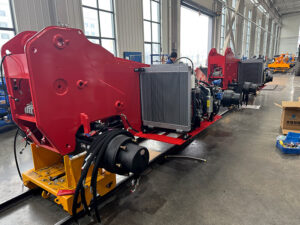
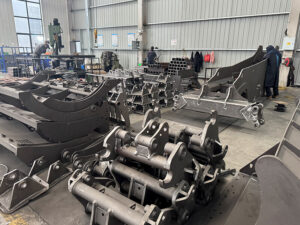
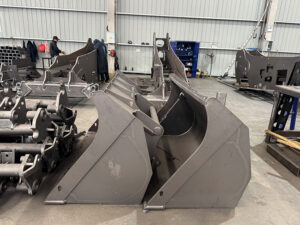
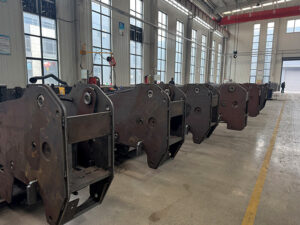
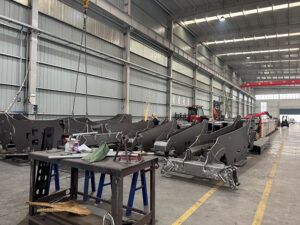
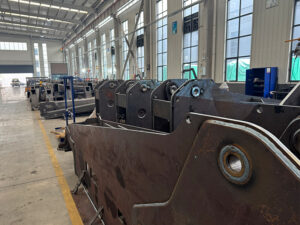
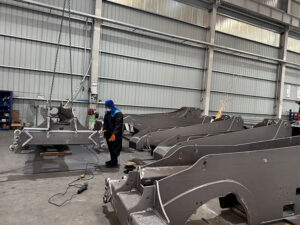
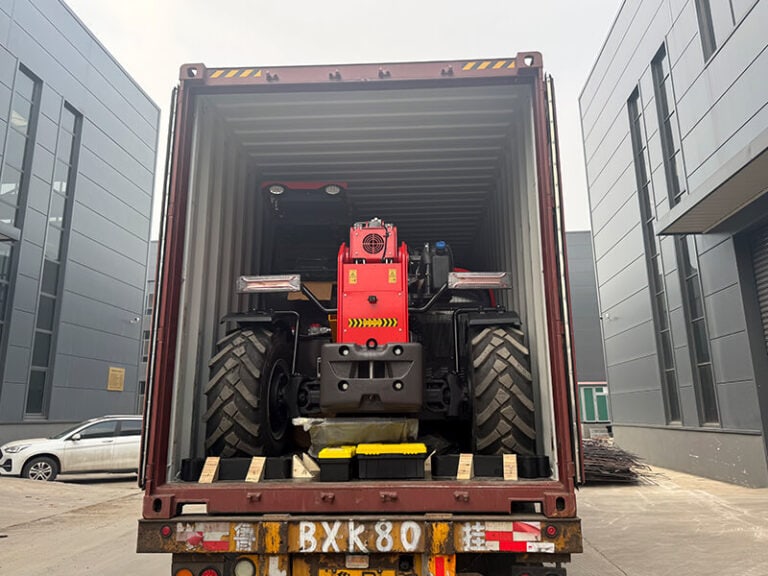
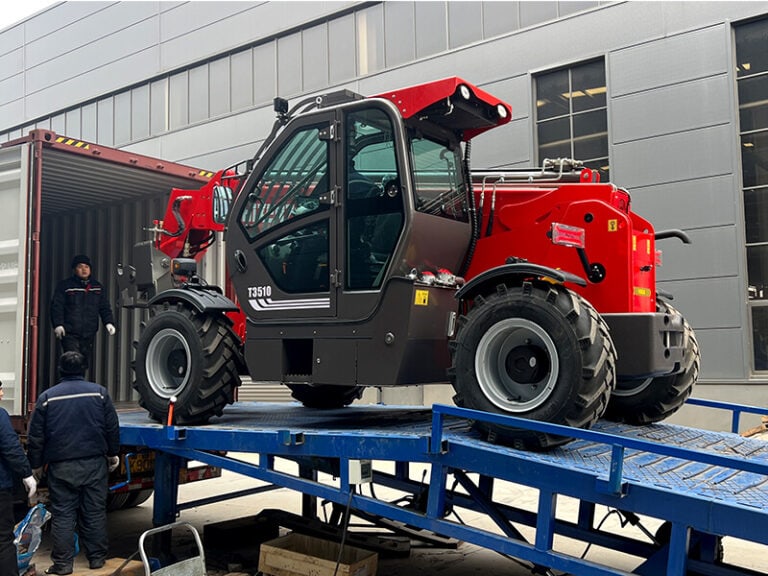
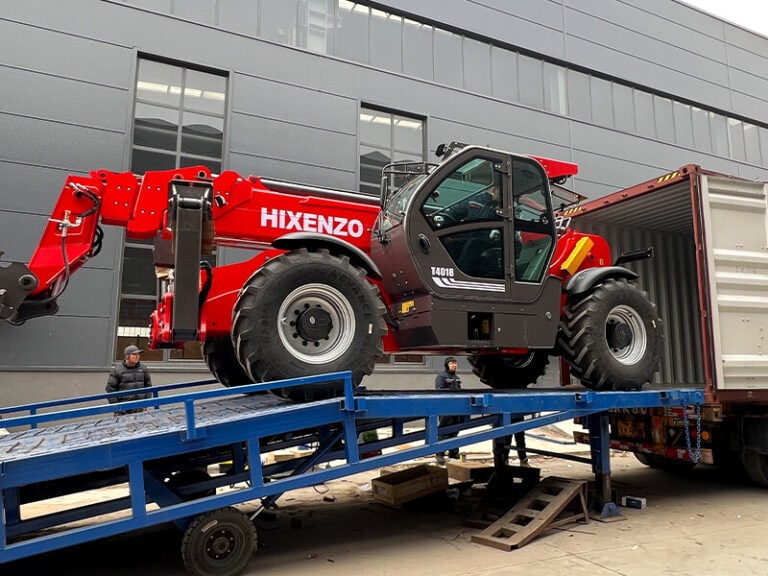
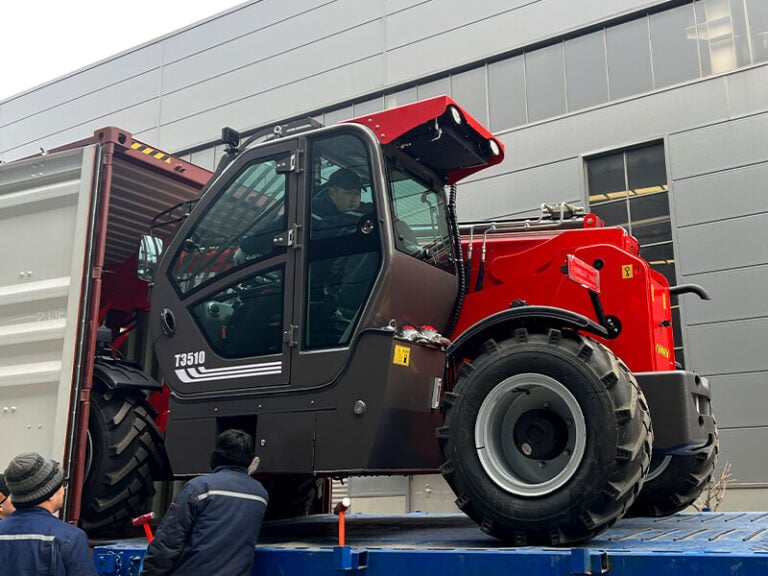
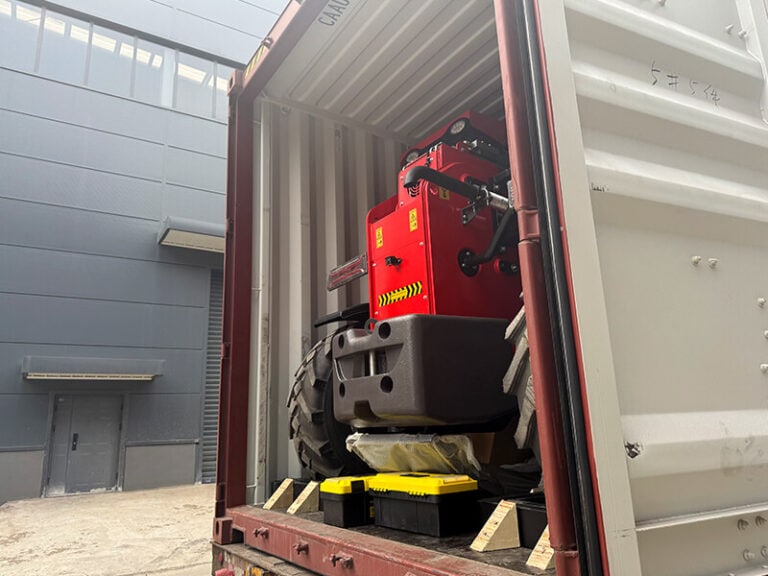
We are a professional telehandler manufacturer based in Shandong, China. The factory covers more than 6,000 square meters and is equipped with modern production workshops, advanced machinery, and efficient assembly lines. With a skilled technical team and solid manufacturing experience, the company has an annual production capacity of over 1,200 telehandlers. From product design and engineering to assembly, inspection, and export, each machine is produced under strict quality control to ensure reliable performance and durability for customers worldwide.
Most Popular Questions.
We have listed some questions you may ask. If you have more inquiries about the telehandlers, please send an inquiry to contact us.
Our telehandlers offer load capacities ranging from 3 tons to 6 tons, suitable for construction, agriculture, warehousing, and industrial applications.
Available attachments include pallet forks, buckets, work platforms, crane jibs, grabs, and winches, allowing multi-functional usage.
They are widely used in construction sites, farms, warehouses, ports, material handling yards, and high-altitude operations.
All machines are manufactured under ISO9001 quality management standards and certified with CE, SGS, and EAC to meet international market regulations.
Yes. We offer technical support, spare parts supply, and professional after-sales guidance to ensure long-term machine performance and customer satisfaction.
Yuchai / Cummins / Perkins / Yanmar / Fiat / Kohler / YN
Standard lifting heights range from 7 meters to 18 meters. Custom lifting heights can be provided based on project requirements.
What is 3.5 Ton Telehandler Construction?
Construction projects slow when materials cannot reach height or distance. Choosing the wrong equipment increases costs, delays schedules, and reduces productivity on demanding job sites.
A 3.5 ton telehandler in construction is a versatile lifting machine that combines forklift functionality with extended reach. It lifts up to 3,500 kg, moves materials across rough terrain, and improves efficiency. Contractors use this telescopic handler to place loads at height, reduce manual labor, and replace multiple machines on site.
Understanding its features and applications helps contractors choose the right equipment for construction efficiency.
What Is a 3.5 Ton Telehandler?
Many buyers first encounter the term telehandler when searching for flexible construction equipment. However, they often struggle to understand how a 3.5-ton model differs from other lifting machines and whether it suits their projects.
A 3.5 ton telescopic handler is a lifting machine designed to handle loads up to 3,500 kg. It features an extendable boom, four-wheel drive, and compatibility with multiple attachments. This telehandler machine combines crane reach with forklift mobility, making it suitable for construction, agriculture, and industrial applications.
A 3.5 ton telehandler forklift is widely considered one of the most balanced machines for medium-sized construction projects. It offers enough lifting capacity for pallets of bricks, steel beams, and construction materials while remaining compact enough to maneuver in tight spaces. Compared to larger telehandlers, this size provides better fuel efficiency and lower operating costs, making it ideal for contractors working on residential and commercial developments.
The extendable boom is what distinguishes a telescopic telehandler from traditional forklifts. Operators can lift materials forward and upward, reducing the need for cranes. Many contractors also prefer a telehandler small model because it allows them to work in confined urban construction sites. These machines can also operate on uneven terrain due to their four-wheel drive and strong chassis design.
Another advantage is attachment versatility. A telehandler with bucket can move sand, gravel, or debris, while fork attachments handle pallets. Work platforms allow operators to lift personnel safely. Because of this multi-functionality, some buyers compare telehandler vs forklift when deciding which equipment to purchase. In most construction environments, a telescopic handler forklifts solution provides greater flexibility and productivity. This is why many contractors actively search for a mini telehandler or mini telehandler for sale when space is limited but performance is still required.
Where Is a 3.5 Ton Telehandler Used in Construction?
Construction sites vary significantly, from urban buildings to rural infrastructure projects. Contractors need versatile equipment that can handle lifting, loading, and transporting materials across different working conditions.
A 3.5 ton telehandler is commonly used to lift pallets, transport materials, load trucks, and place supplies at height. Its off-road capability and extendable boom make it ideal for construction environments where flexibility and reach are essential.
In residential construction, a telehandler machine helps move bricks, cement bags, and roofing materials. Instead of using manual labor, contractors rely on telescopic handlers to improve efficiency. These machines can place materials directly on scaffolding or upper floors, reducing time and safety risks. A telehandler small design is particularly helpful in narrow building areas where larger equipment cannot operate.
Infrastructure projects also benefit from telehandlers. Road construction teams use them to transport pipes, barriers, and heavy components. On industrial sites, a telehandler forklift loads and unloads containers, improving workflow. Some contractors choose a telehandler with bucket for earthmoving tasks, such as clearing debris or handling bulk materials. This flexibility reduces the need for additional machines.
For warehouse construction, telescopic handler forklifts provide extended reach to install steel structures and panels. Operators can move loads across uneven terrain while maintaining stability. Many companies compare telehandler vs forklift performance and find that telehandlers work better outdoors. Because of these advantages, distributors often promote telehandler for sale options targeting construction companies. Buyers searching for compact solutions may also look for mini telehandler for sale, especially when operating in tight job sites or urban environments.
3.5 Ton Telehandler vs Forklift: Which Is Better?
Choosing between a forklift and a telehandler is a common decision for contractors. Each machine serves lifting purposes, but their performance varies depending on construction site conditions.
When comparing telehandler vs forklift, telehandlers offer greater reach, better terrain capability, and multi-attachment flexibility. Forklifts are ideal for flat surfaces, while telescopic handlers perform better in construction environments requiring height and distance.
Traditional forklifts are primarily designed for warehouse operations. They work efficiently on smooth floors but struggle on uneven ground. In contrast, a telehandler forklift combines lifting capability with mobility. Its extendable boom allows operators to place loads at height without repositioning the machine. This feature is particularly useful when working around obstacles or limited space.
A telescopic handler also provides improved ground clearance and stability. Construction sites often include mud, slopes, and rough surfaces, making forklifts less practical. By using telehandlers, contractors can move materials across challenging terrain safely. Additionally, telehandlers support multiple attachments. A telehandler with bucket can handle bulk materials, while forks manage pallets. This multi-purpose design increases efficiency.
Another key factor is productivity. Although the telehandler price may be higher initially, the machine replaces several pieces of equipment. Contractors can reduce labor costs and improve workflow. This is why many buyers search for telehandler forklift for sale options when upgrading equipment. Compact models like mini telehandler units are also gaining popularity due to their flexibility. Overall, the comparison of telehandler vs forklift shows that telehandlers provide better performance for construction applications.
How to Choose a Reliable 3.5 Ton Telehandler Supplier?
Selecting a reliable supplier is critical for construction companies and distributors. Poor communication, delayed shipments, and inconsistent quality can negatively affect business operations and customer satisfaction.
A dependable supplier should provide certifications, stable delivery timelines, technical support, and competitive telehandler price options. Clear communication and quality assurance help buyers avoid risks and maintain project schedules.
When sourcing a telehandler for sale, buyers should first evaluate the manufacturer’s experience in exporting equipment. Companies with international sales history typically understand logistics requirements and documentation. Certifications such as CE or ISO confirm that telescopic handlers meet safety standards. Requesting inspection reports or videos can help verify product quality before shipment.
Communication is another essential factor. Many buyers experience delays due to unclear specifications or slow responses. A professional supplier will provide detailed product data, including lifting capacity, reach height, and attachment compatibility. This ensures the selected telehandler machine meets project requirements. Additionally, reliable suppliers offer spare parts support, which is crucial for long-term operation.
Logistics capability also impacts purchasing decisions. Contractors in South America, the Middle East, and Africa require dependable shipping schedules. Delays can cause missed sales seasons. Choosing a supplier that provides flexible payment methods and clear delivery timelines reduces risk. Buyers searching for mini telehandler for sale or telehandler forklift for sale should also confirm after-sales service availability. A strong partnership ensures consistent supply, competitive telehandler price, and better customer satisfaction.
Riepilogo
A 3.5 ton telehandler improves construction efficiency, flexibility, and safety. Choosing reliable suppliers and the right model helps contractors maximize productivity and reduce operational costs.
Want to find the source factory to save money in the middle?
We supports customized telehandlers, offering tailored solutions to meet diverse working requirements. Our innovative designs ensure high efficiency, reliability, and adaptability, making them ideal for various applications and environments in construction, agriculture, and industrial material handling.

Get Customized Solutions Now!
We provides 1v1 engineer service, 24-hour online service for you. If you have any questions, please feel free to contattaci.