Telehandler with man basket provides a safe, mobile, and efficient solution for working at height, helping prevent major project bottlenecks. Scaffolding is time-consuming to erect, while relying on ladders for complex tasks can introduce significant safety risks. By adding a man basket to your existing telehandler, you can transform it into a versatile aerial work platform for secure and efficient elevated access.
أ telehandler with a man basket is an excellent choice for many job sites because it combines the rough-terrain mobility and lifting power of a telescopic handler with the personnel-lifting capabilities of a mobile elevating work platform (MEWP). This versatility allows one machine to handle both material and personnel lifting, increasing efficiency and reducing the need for multiple pieces of equipment.
This dual-use capability is a game-changer for efficiency. But before you attach a work platform to your machine, it’s critical to understand the safety requirements, the types of telehandlers suitable for the task, and how this setup compares to other lifting solutions. Let’s dive into the details.
What Safety Regulations Govern a Telehandler with a Man Basket?
The thought of lifting people with a machine primarily designed for heavy materials can be unsettling. If not done correctly, the risk of an accident is high, with potentially catastrophic consequences for both workers and your business. The solution lies in strict adherence to established safety standards and operational protocols.
Using a telehandler with a man basket is governed by stringent safety regulations that vary by region but share common principles. In the United States, for instance, OSHA (Occupational Safety and Health Administration) has specific rules for using forklifts and telehandlers as personnel lifts. Similarly, European standards (like EN 280) dictate the requirements for MEWPs.
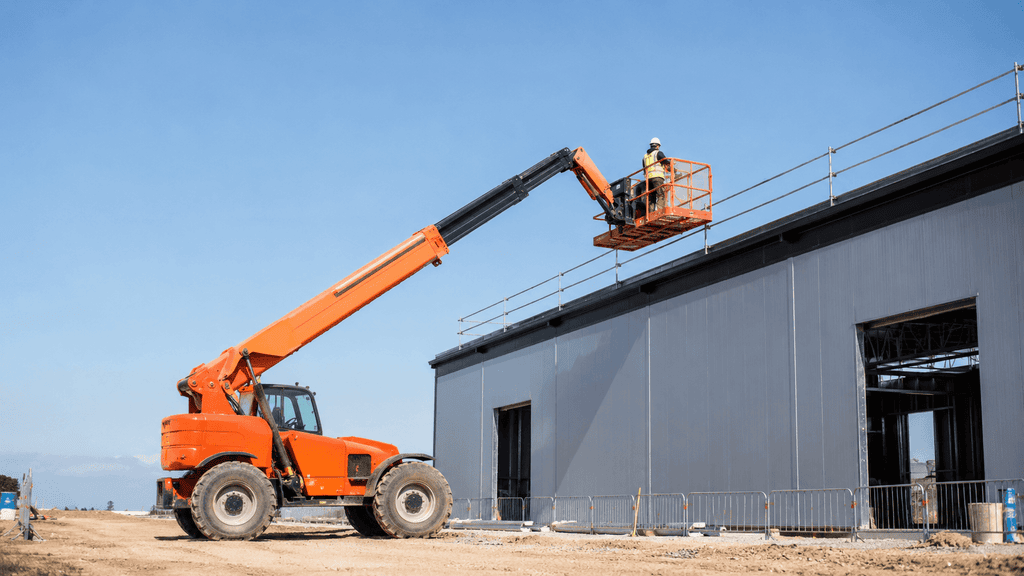
Dive Deeper: Critical Safety Pillars
Ensuring safety isn’t just about owning a certified machine; it’s about creating a comprehensive safety culture around its use. From my 16 years of experience exporting these machines, I’ve seen that the most successful distributors are those who educate their customers on these three pillars.
Operator Training and Certification
An operator trained to move pallets is not automatically qualified to lift people. Operating a مناولة with a man basket requires specific training that covers:
- Understanding the machine’s load chart, especially how it changes when a man basket is attached.
- Smooth operation of the boom to avoid sudden jerks or drops.
- Proper communication between the operator and the personnel in the basket.
- Emergency lowering procedures.
- Performing pre-use inspections specific to the basket attachment.
Operators must be certified for this specific task. As a supplier, we always emphasize to our dealer partners that end-user training is non-negotiable for safe operation.
Machine and Attachment Compatibility
You cannot simply fit any basket onto any telehandler machine. The telehandler and the man basket must be designed by the manufacturer to work together.
- Manufacturer Approval: The telehandler’s manufacturer must explicitly state that the model can be used with a specific man basket attachment. This information is found in the operator’s manual.
- Integrated Controls: Ideally, the basket should have its own set of controls, allowing the personnel inside to fine-tune their position.
- Secure Attachment: The attachment mechanism must be fail-safe, locking the basket securely to the telehandler’s boom. A simple fork-mounted platform is often insufficient and may not meet safety standards.
We design our telescopic handler models with clear specifications on which attachments are certified for use, ensuring there is no dangerous guesswork for the end-user.
Pre-Use Inspections and Site Evaluation
A daily routine is the first line of defense against accidents.
- Daily Checklist: Before any operation, the operator must inspect the telehandler and the man basket. This includes checking hydraulic lines, control functions, safety latches, tire pressure, and the structural integrity of the basket.
- مستوى الأرض: ال telescopic telehandler must be operated on firm, level ground. The machine’s stability is paramount when the boom is extended with people in the basket.
- Weather Conditions: High winds can make operating a telehandler with a man basket extremely dangerous. Always check the manufacturer’s specified maximum wind speed for operation.
Which Type of Telehandler is Best for a Man Basket?
You know you need the functionality, but with so many models on the market, from a mini telehandler to a massive high-reach machine, choosing the right one can be overwhelming. Making the wrong choice means you either overspend on a machine that’s too large or end up with a small telehandler that can’t meet your height and capacity needs.
The best type of telehandler depends entirely on your application’s specific requirements for lift height, weight capacity, and job site accessibility. A mini telehandler is ideal for navigating tight, confined spaces, whereas larger telescopic handlers are necessary for projects requiring significant vertical and horizontal reach.
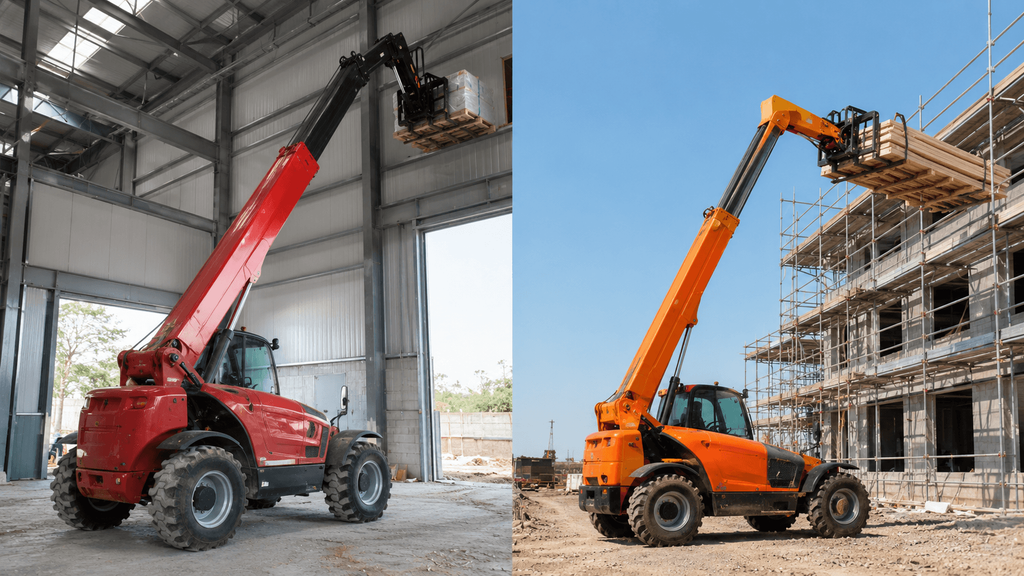
Dive Deeper: Matching the Machine to the Mission
When our distributors inquire about a telehandler for sale for their customers, the first question we ask is always about the intended application. The answer determines which model we recommend.
Compact and Mini Telehandlers
Compact or mini telehandler models have seen a surge in popularity, especially in landscaping, agriculture, and residential construction.
- المزايا: Their small footprint allows them to work indoors or in congested outdoor areas where a standard telehandler couldn’t fit. They are lighter, easier to transport, and generally have a lower telehandler price.
- Limitations: Their primary limitation is reach and capacity. They are typically suitable for lower-level work, reaching second or third stories. When equipped with a man basket, their personnel capacity is often limited to one person and their tools. If you’re looking for a رافعة تلسكوبية صغيرة for sale, be sure to verify its load chart for personnel lifting.
Standard Telescopic Handlers
These are the workhorses of most construction and industrial sites. Our factory specializes in this range, producing models with lift capacities from 2.5 to 7 tons and reach from 6 to 18 meters.
- المزايا: These machines offer a powerful combination of reach, capacity, and rough-terrain performance. They can lift two people plus tools to significant heights, making them suitable for a wide range of tasks like facade work, electrical installation, and building inspections.
- براعة: This is their key selling point. The same machine can unload a truck of pallets using forks, move bulk material with a bucket (telehandler with bucket), and then be fitted with a man basket for aerial work, all in the same day.
Here is a comparison to help you decide:
| ميزة | Mini Telehandler | Standard Telescopic Handler |
|---|
| Typical Lift Height | 3–6 meters | 6–18 meters |
| Typical Lift Capacity | 1–2.5 tons | 2.5–7 tons |
| أفضل ل | Confined spaces, agriculture | Construction, industrial sites |
| Footprint | Small, highly maneuverable | Larger, requires more space |
| Transport | Can be towed by a heavy-duty truck | Requires low-boy trailer |
Why Choose a Telehandler with a Man Basket Over a Forklift or Boom Lift?
Procurement managers face a tough decision: do you buy several specialized machines or one versatile one? Opting for a dedicated boom lift and a separate telehandler forklift means more upfront cost, more maintenance, and more machines to manage on site. But is a single, multi-purpose machine truly as effective?
A telehandler with a man basket is chosen for its unparalleled versatility. Unlike a standard forklift, which is not designed or rated for safely lifting people, a telehandler is engineered for boom extension. It serves as both a telehandler forklift for materials and a personnel lift, offering a two-in-one solution that dedicated machines cannot match.
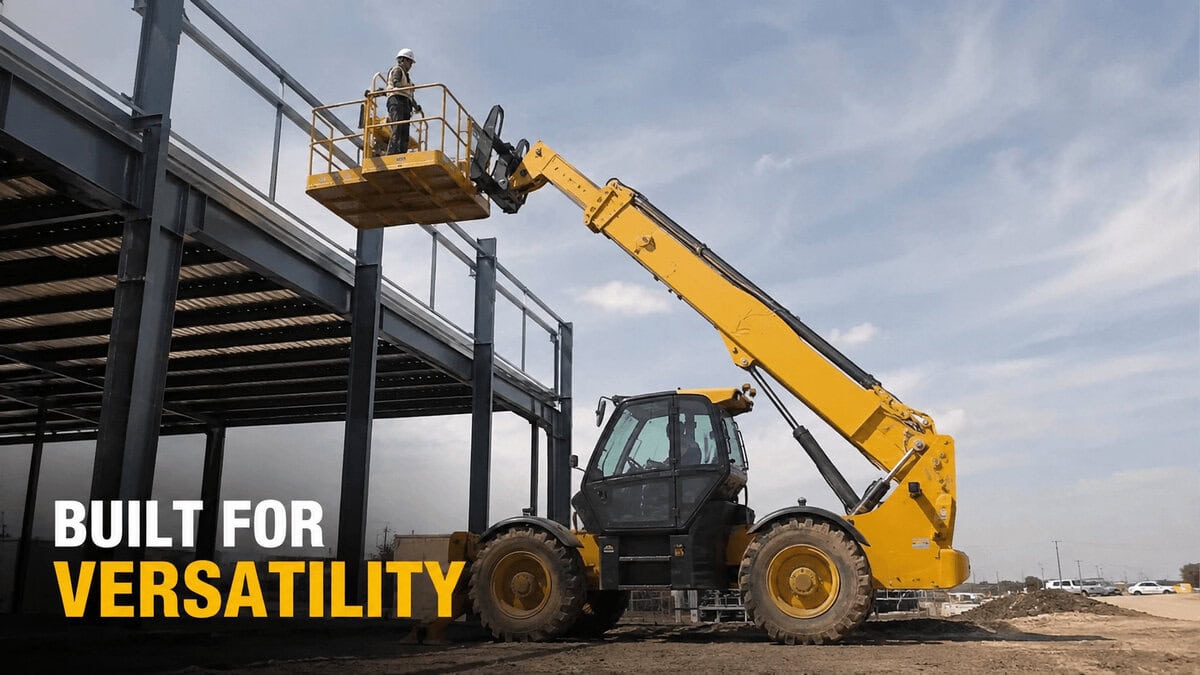
Dive Deeper: The Value of Versatility
When discussing options with potential distributors, the telehandler vs رافعة شوكية debate comes up frequently. The distinction is crucial for both safety and efficiency.
Telehandler vs. Forklift
The most critical difference lies in design and purpose.
- Functionality: A standard forklift has a vertical mast designed to lift loads straight up and down. A telehandler has a telescopic boom that can extend forwards and upwards, providing both height and reach—much like a crane.
- أمان: It is fundamentally unsafe and non-compliant in most regions to attach a personnel cage to the forks of a standard forklift. These machines lack the stability and safety systems required for lifting people. Telescopic handler forklifts, however, are built with this dual purpose in mind, featuring load management systems and a more stable chassis.
I once visited a site where a manager was considering a cheap cage for his standard forklift. I had to explain that the risk of a tip-over was immense because the machine’s center of gravity isn’t designed for that kind of load at height. He ultimately invested in a proper small telehandler instead.
Telehandler vs. Dedicated Boom Lift (MEWP)
A Mobile Elevating Work Platform, or boom lift, is purpose-built for lifting people. So why not just buy one of those?
- Specialization vs. Versatility: A boom lift does one job exceptionally well. A telehandler machine does many jobs very well. If your site requires moving pallets, loading trucks, and lifting personnel, a single telehandler can replace a forklift and a boom lift.
- Cost of Ownership: While the initial telehandler price might seem comparable to a boom lift, the total value is higher. You are buying the capability of multiple machines. For a rental company or a large contractor, this means higher utilization rates for a single asset. If you are a dealer considering a رافعة شوكية للبيع, this versatility is your strongest selling point.
The bottom line is that a telehandler offers a flexible, cost-effective solution for sites with diverse lifting needs.
أسئلة مكررة
What is the maximum height a telehandler with a man basket can reach?
The maximum height depends entirely on the telehandler model. Compact models might reach around 6 meters (20 feet), while our larger telescopic handlers can safely lift personnel up to 18 meters (nearly 60 feet) or more. Always consult the machine’s specific load chart for exact height and weight limits.
Can I use any man basket on my telehandler?
No. You must only use a man basket that is specifically approved by the telehandler’s manufacturer for that exact model. Using an incompatible or uncertified attachment is extremely dangerous and violates safety regulations. The locking mechanism and weight calculations are model-specific.
How does the telehandler price compare to other lifting equipment?
The upfront telehandler price is typically higher than a standard rough-terrain forklift but can be lower than a dedicated boom lift of similar reach. However, its value comes from versatility. By replacing two or even three other machines, a telehandler can offer a significantly lower total cost of ownership.
What is a mini telehandler used for?
A mini telehandler is used for material and personnel lifting in confined spaces. They are popular in agriculture for moving hay bales, in landscaping for placing trees, and in residential construction for lifting materials to the second floor where a larger machine would not fit or would damage the terrain.
خاتمة
Choosing the right equipment is crucial for both safety and profitability. A telehandler with a man basket stands out as a uniquely versatile solution, capable of adapting to the changing demands of a dynamic job site. When operated correctly, it provides a safe, efficient, and cost-effective way to perform work at height while retaining the powerful material handling capabilities of a telescopic handler. The key is to prioritize safety through proper training, use only manufacturer-approved attachments, and select the right machine for the job—whether it’s a nimble mini telehandler or a high-reach model.
If you are an equipment distributor looking to provide your customers with high-quality, certified telehandlers, our factory in Shandong is your ideal partner. With 16 years of export experience to Europe and the Americas, CE and ISO9001 certifications, and a focus on models from 2.5-7 tons, we are ready to meet your needs. Contact us today to learn more about our competitive pricing and customization options.